

Trading & Trading Safety: Navigating the SA Scene
Field Report: Community Protocol & Fraud Prevention
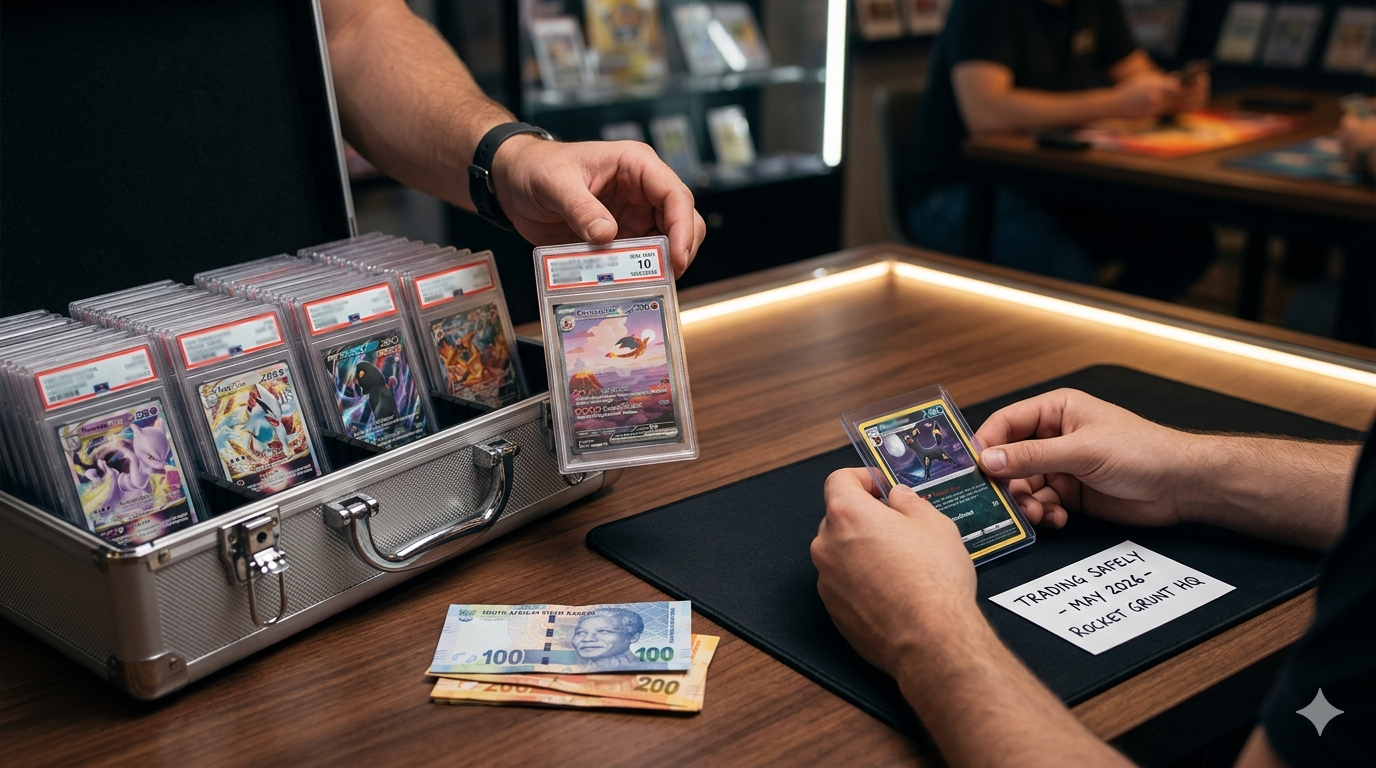
The South African Pokémon TCG community has exploded. What used to be a niche hobby has transformed into a massive network of dedicated collectors and competitive players. But as the stakes get higher and the cards get rarer, the "Team Rocket" element inevitably creeps in. Today, we’re breaking down the infrastructure of the local scene and how to keep your collection safe from scammers.
The Grunt's Briefing:
Phase 1: The Local Digital Marketplace
In South Africa, trading doesn't just happen at tournaments; it lives on WhatsApp and Facebook. The community has established massive hubs where 1,000+ members trade, buy, and sell daily. If you aren't in these groups, you're missing out on the true heartbeat of the market.
The two primary neutral powerhouses are PokeFam and PokeCartel. These groups act as a digital bazaar, where everything from bulk cards to high-end PSA 10 slabs moves in minutes. Additionally, most reputable stores manage their own dedicated communities. This allows you to stay updated on local restocks and events specifically for your area.
At Rocket Grunt TCG, we maintain our own active WhatsApp community to keep our trainers connected with the latest drops and hobby news.
Phase 2: The Vouch System & Verification
Trust is the currency of the SA scene. When dealing with an individual seller for the first time, you must utilise the Vouch System. On the large Facebook groups (like Pokémon TCG South Africa) or WhatsApp hubs, you are entitled to ask for a "vouch" for any user.
The Golden Rules of Vouching:
- 🔍 The 2+ Rule: Never accept a single vouch. Wait until you have at least two recognisable, veteran names in the scene confirming a successful past transaction.
- 🔍 Admin Authority: If you are unsure, tag a group admin. They have a bird's-eye view of who is legit and who has been flagged for "dodgy" behavior.
- 🔍 Recognize the Names: A vouch from a profile created yesterday is worthless. Look for endorsements from community leaders or established collectors.
Phase 3: Red Flags & Technical Fraud
Scammers are getting more sophisticated, but they often leave footprints. Facebook Marketplace and certain unmoderated groups are notorious for "sketchy characters" offering prices that seem impossible.
Timestamps and Namestamps
If a seller does not provide a photo of the card with a handwritten note containing their name and the current date (a "namestamp"), do not buy. However, even this is being challenged. We are seeing a rise in AI-recreated timestamps, where scammers digitally insert a note into a high-quality photo stolen from eBay. If the lighting on the note doesn't perfectly match the lighting on the card, or if the text looks "floated," exercise extreme caution.
⚠️ The Grunt’s Logic Check:
If the price is too good to be true, it is. The SA market is highly educated; every seller knows how to use PriceCharting or TCGPlayer. Nobody is accidentally selling a R5,000 card for R1,000 because they "don't know what it is."
Phase 4: Secure Logistics & Middlemen
For high-end trades or sales involving substantial amounts of money, you should consider using a Middleman. This is a trusted, neutral third party (often an admin or a shop owner) who receives both the payment and the card, verifies both are legitimate, and then facilitates the final exchange. It adds a small layer of shipping complexity but provides 100% security for both parties.
Finally, always ensure you use reputable, tracked couriers like The Courier Guy, Pudo or Postnet. In the world of TCGs, trying to save R30 on shipping when sending a R5,000+ card - is stupid.
Grunt’s Final Advice:
The South African scene is built on community. Don't be afraid to ask questions, double-check prices, and demand verification. A legitimate seller will never be offended by your due diligence—they’ll respect it. Stay safe and happy hunting! 🙂
Want to ensure your cards are the real deal? Read our previous guide on How to Spot Fake Pokémon Cards.